
Linen vs Cotton Aprons: Fabric, Fit and Everyday Care
Choosing between a linen and cotton apron is easier when you compare the whole garment. Start with the fabric composition, then look at the finish, shape, straps and care instructions. A linen blend is not automatically the better choice, and two cotton aprons can offer very different ways to dress for the same afternoon in the kitchen.
In the Hanee collection, our cotton styles include simple slip-on, gathered and ruffled designs. Our linen-blend styles offer a choice between a clean-lined apron with an adjustable neck strap and a gathered pinafore with cross-back straps and waist ties. The useful question is not simply “Which fabric wins?” It is “Which combination will I enjoy wearing?”
What the fabric description tells you
“100% cotton” describes the fiber content. “Linen and cotton blend” tells you that the fabric combines those two fibers. Neither description, by itself, tells you how thick the apron is, how its straps work or whether it has a special finish.
Our Classic Linen Apron and Premium Linen Pinafore use the same fabric: 80% linen and 20% cotton. The difference is in their shape and strap construction, not the fabric blend.
Fabric construction and finishing matter alongside composition: yarn and weave choices affect how a fabric behaves, while finishes can change its feel and function. Cotton Incorporated explains these distinctions in its resources on woven fabric design and textile finishing.
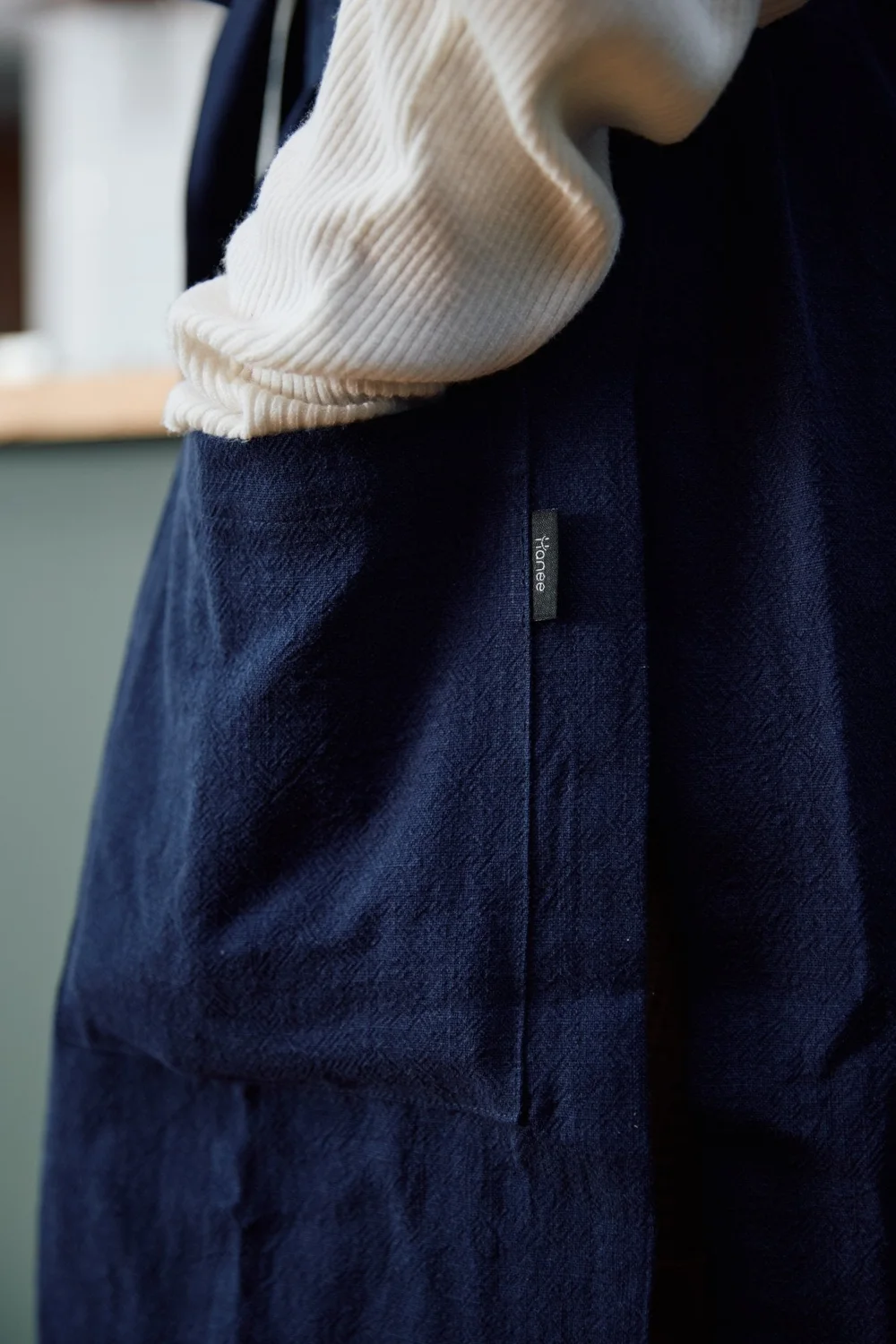
When shopping online, use close-up photographs to look at the visible surface, seams and pockets, and full-length photographs to understand the shape. A photograph cannot tell you exactly how the fabric will feel in your hands. If fabric weight or a particular finish matters to you, ask about that style rather than guessing from its fiber name.
Compare the five Hanee styles
The same material can appear in different silhouettes. Use this comparison to separate the fabric from the way you put the apron on.
| Hanee style | Fabric and finish | Straps and waist | Shape |
|---|---|---|---|
| Everyday Cross-Back Apron | 100% cotton | Tie-free cross-back | Simple, slip-on |
| Cottagecore Pinafore Apron | 100% cotton | Tie-free cross-back | Gathered pinafore |
| Toile Ruffle Apron | 100% cotton with a water-repellent finish | Ruffled cross-back straps and waist ties | Patterned, ruffled |
| Classic Linen Apron | 80% linen, 20% cotton | Adjustable neck strap and waist ties | Clean-lined |
| Premium Linen Pinafore Apron | 80% linen, 20% cotton | Cross-back straps and waist ties | Gathered pinafore |
Water repellency is a feature of the Toile Ruffle's finish, not a promise made for every cotton apron. It does not mean waterproof protection.
Choose cotton for the style you want to wear
If you want a cotton apron with no waist knot, begin with the Everyday Cross-Back or Cottagecore Pinafore. The Everyday has a simple shape and front pockets. The Cottagecore offers a gathered silhouette and three pockets. Both are tie-free, so the choice between them can start with your preference for a straighter or more gathered look.
For pattern and a tied waist, look at the Toile Ruffle. Its cotton fabric, toile print and ruffled straps make it a different option from the two slip-on styles. You can prefer cotton and still choose waist ties; the fiber does not decide the construction.
Picture the clothes you usually cook in. Would you like an uncomplicated layer over a shirt and trousers, or a gathered shape over a blouse? That preference can help narrow the collection without turning the choice into a contest between fabrics.
Choose a linen blend by shape and adjustment
If you are drawn to our linen-blend designs, compare the Classic Linen and Premium Linen Pinafore side by side.
The Classic pairs a clean-lined shape with an adjustable neck strap, waist ties and a front pocket. It is a starting point if you prefer that traditional apron arrangement. The Premium has a gathered silhouette, cross-back straps and waist ties, giving you a different shape within the linen-blend part of the collection.
A higher linen percentage alone is not enough to rank finished aprons for softness, durability or ease of care. Look at the actual garment and the details that matter to your routine. Nor does “linen blend” mean you should automatically choose a particular size: the pattern and garment measurements still matter.

Keep fit separate from fabric
Once you have a shortlist, compare its measurements with an apron you already like wearing. Check the stated length and front-panel width, and whether the measurements include straps or ties. Consider the clothes underneath and the coverage you want at the sides.
Waist ties adjust how an apron sits; they do not make its fabric panel longer or wider. Likewise, a tie-free design still needs to suit your measurements. Our apron size and fit guide explains how to make those comparisons without relying on a size name alone.
Let the care label make the washing decision
Before choosing a wash cycle, drying method or iron setting, read the instructions sewn into your particular apron. Do not transfer a setting from one cotton or linen-blend garment to another just because the fiber description looks similar.
Check three things before the first wash:
- The permitted washing method and temperature.
- The drying instructions, including whether tumble drying is allowed.
- Any ironing, bleach or treatment restrictions, especially for a fabric with a special finish.
If a care routine is important to your purchase decision, clarify it before ordering. If you already own the apron and the label is unclear, contact Hanee with the style name and a photograph of the label. Our linen-apron care guide offers a label-first checklist; it does not replace the instructions on your garment.
Questions about cotton and linen-blend aprons
Is linen always better than cotton for an apron?
Not as a blanket buying rule. Compare the particular aprons, including fabric, finish, construction and care. Within Hanee, both material groups offer distinct styles; choosing the shape and adjustment you prefer is more useful than assuming one fiber name guarantees a better garment.
Does a cotton apron have no ties?
Not necessarily. Hanee's Everyday Cross-Back and Cottagecore Pinafore are tie-free. The cotton Toile Ruffle has waist ties. “Cross-back” describes the straps, not the absence of a knot.
Is the Toile Ruffle waterproof?
No. Its cotton fabric has a water-repellent finish, which is not waterproof protection. Do not use the term “waterproof” as a substitute for its actual finish description.
Can I wash every Hanee apron the same way?
Do not assume so. Follow the label for the specific apron, including instructions for its finish and details. Our care and fit page is a useful starting point if you need help.
Find your everyday apron
Start with the combination you want: cotton or a linen blend, a simple or gathered shape, and a tie-free or adjustable tied fit. You can compare the Hanee collection, or go straight to your preferred style on Amazon below. Choose your country and check the selected listing's size information, options and delivery details before ordering.
Everyday Cross-Back Apron
Cottagecore Pinafore Apron
Toile Ruffle Apron
Classic Linen Apron
Premium Linen Pinafore Apron