
Cross-Back vs Neck-Strap Aprons: Which Style Suits You?
The main difference is where the straps go: a cross-back apron has straps that pass over the shoulders and cross behind you; a neck-strap apron has a strap around the back of the neck. But there is a second question worth asking before you choose: do you want to tie the waist, or skip the knot altogether?
Cross-back does not always mean tie-free. In the Hanee collection, you can choose a slip-on cross-back, a cross-back with waist ties, or an adjustable neck strap with waist ties. Start with the way you want to put the apron on, then consider its shape and fit.
Three constructions, three starting points
| Construction | What you do when getting dressed | Hanee styles | Consider it if… |
|---|---|---|---|
| Tie-free cross-back | Slip it on, without a neck or waist knot | Everyday Cross-Back; Cottagecore Pinafore | You would rather leave tying out of your routine |
| Cross-back with waist ties | Settle the shoulder straps and tie the waist | Toile Ruffle; Premium Linen Pinafore | You want shoulder straps and a waist you can draw in |
| Adjustable neck strap with waist ties | Adjust the neck strap and tie the waist | Classic Linen | You like a traditional bib shape with neck and waist adjustment |
These are construction choices, not fit guarantees. The dimensions of the particular apron still matter.
If the knot is the part you want to skip
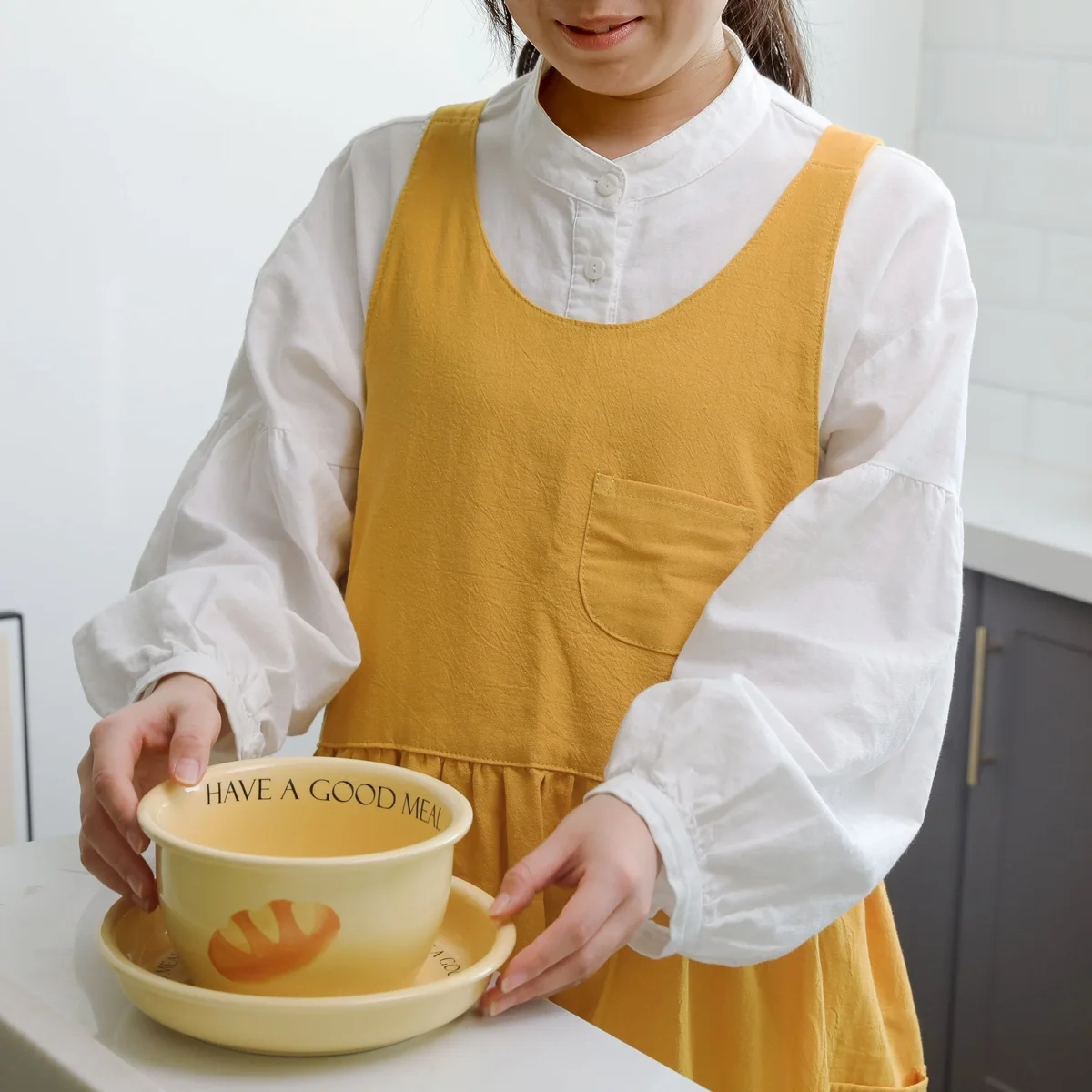
Look specifically for tie-free, not just cross-back. Our Everyday Cross-Back and Cottagecore Pinafore both use a slip-on cross-back construction without waist ties.
That gives you two different looks within the same no-knot starting point. The Everyday has a simple silhouette and front pockets. The Cottagecore Pinafore has a gathered shape and three pockets. Both are 100% cotton.
Picture the moments when you reach for an apron: before breakfast, while mixing a cake, or for a few minutes arranging flowers. If you would prefer not to tie and untie a waist knot each time, this is the category to explore.
There is a trade-off to check: without waist ties, you cannot use a waist knot to change how closely the apron sits. Try it over your usual clothes and see whether you like the shape as it is. Tie-free describes the fastening, not whether putting it on will feel effortless for every wearer.
For a closer look at the simple option, read the story behind our Everyday Cross-Back Apron.
If you want cross-back straps and a defined waist
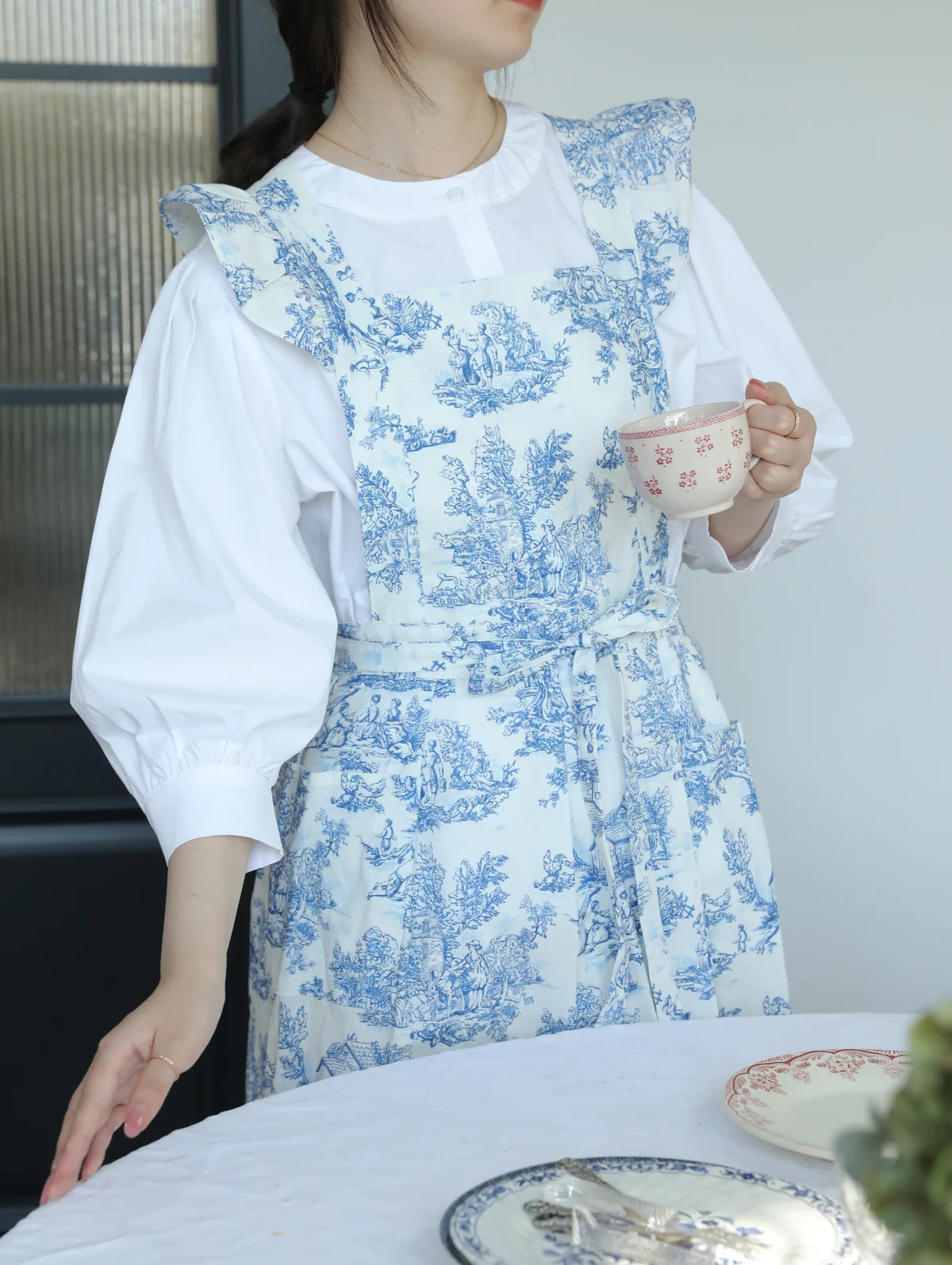
Our Toile Ruffle and Premium Linen Pinafore combine cross-back straps with waist ties. They belong in a different category from our tie-free styles, even though all four have straps that cross behind you.
Choose this starting point if you like adjusting the waist over the clothes underneath. You might want a different amount of room over a blouse than over a light T-shirt. Settle the apron first, then tie the waist without pulling the front out of the position you want.
The two styles offer different details: the Toile Ruffle has a blue-and-white toile pattern and ruffled straps; the Premium Linen Pinafore has a gathered silhouette in a linen-and-cotton blend. The choice is about the look you enjoy as well as the fastening.
Before deciding, check whether you can comfortably reach and tie the waist in the intended position. Do not assume that every set of ties will wrap around to the front on every wearer, or that cross-back straps are adjustable in the same way as a neck strap.
If you like adjusting a traditional bib apron
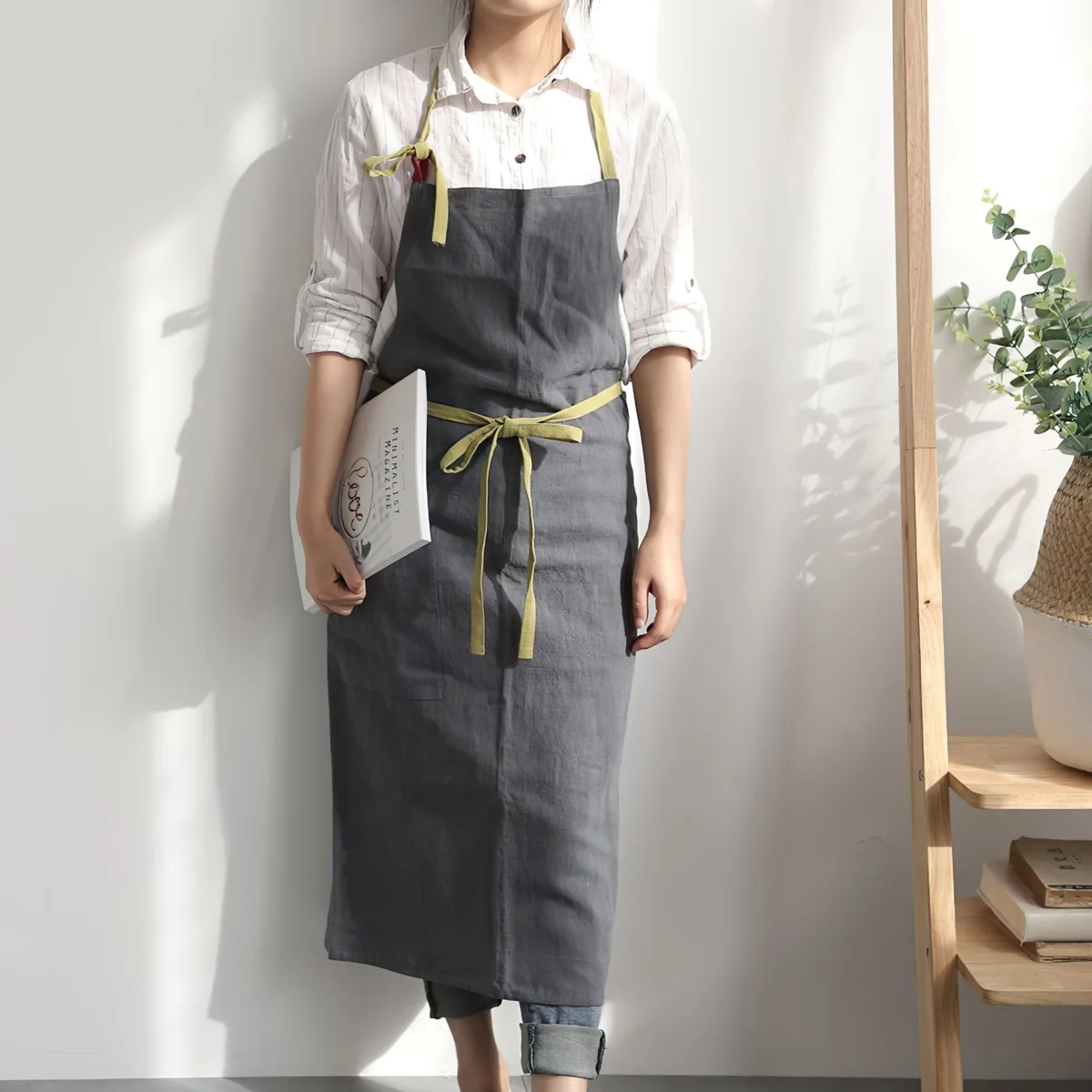
Our Classic Linen Apron has an adjustable neck strap, waist ties and a clean-lined shape. Adjusting the neck strap changes where the bib sits; tying the waist lets you settle the apron around your clothing.
When trying it on, start with the bib at a height you like, then tie the waist and check it again. Look at the top and sides rather than only the hem: are the areas you want covered still covered when you reach forward?
This is a useful option to consider if you like making those adjustments yourself. It does not mean the adjustment range is unlimited, or that the same setting will suit someone else who uses the apron.
Our Classic Linen story shows its straightforward shape and contrasting ties.
Compare the fastening in your own routine
An apron can look right in a photograph and still have details you would change. When you can try one on, give the fastening a small everyday test:
- Wear your usual layers. Use the shirt, blouse or cardigan you would actually have underneath.
- Put it on and take it off. Notice whether the slip-on movement, neck adjustment or waist knot suits you.
- Reach toward a work surface. Check that the straps stay where you want them and the front does not pull awkwardly.
- Sit, then stand again. See whether a knot presses where you dislike it or the fabric needs rearranging.
If you find yourself repeatedly fixing a strap or knot, treat that as useful information about that particular fit. No strap style is the automatic winner for everyone.
Before ordering online, check the listing's measurements and construction details. Our apron size guide explains how to compare coverage; the shorter care and fit guide is a quick reference.
Keep fabric and strap choice separate
You do not have to choose between cotton and a linen blend to choose between these fastenings. Hanee's cotton styles include both tie-free cross-backs and the tied-waist Toile Ruffle.
Our Premium Linen Pinafore and Classic Linen Apron use the same fabric—80% linen and 20% cotton—but have different shapes and straps. The Premium is a gathered cross-back with waist ties; the Classic has an adjustable neck strap and waist ties.
For a fuller material comparison, see our linen vs cotton apron guide.
Find the fastening you will enjoy using
Begin with one preference: no knot, a tied waist with cross-back straps, or an adjustable neck strap. Then compare the specific apron's shape, measurements and details. You can see the Hanee collection together, or shop the styles below directly on Amazon.
Choose your country and check the selected listing's size information, options and delivery details before ordering.
Everyday Cross-Back Apron
Cottagecore Pinafore Apron
Toile Ruffle Apron
Premium Linen Pinafore Apron
Classic Linen Apron